Bobby Tanner
The Thursday Murder ClubBobby Tanner is a former local dealer and hired muscle who has recast himself as Peter Ward, a florist in Folkestone. His two names place him at the hinge between an older criminal network and the search for Tony Curran’s killer: the photograph linking Bobby, Curran, and Jason Ritchie draws investigators toward him, while his new identity makes him difficult to find. When Elizabeth and Joyce do find him, he offers information but also insists on being addressed by the name he uses now.
Identity and Background
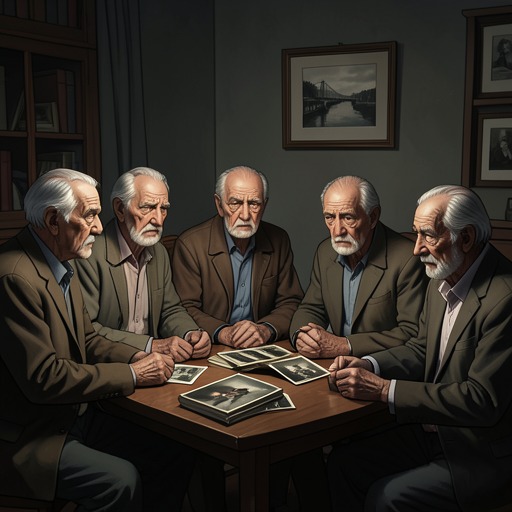
Bobby’s past enters the investigation first through a photograph. Chris Hudson sees him beside Tony Curran, with Jason Ritchie nearby, in an image of three men at a table with beer and money. The picture appears to date from around 2000, the period when a boy was shot at the Black Bridge. Bobby is identified as a local dealer from that earlier time, hired as muscle; his whereabouts in the present are unknown. The photograph therefore does more than establish an association: it gives the police a visible link between Curran’s murder and an older episode of violence.
The image’s meaning is uncertain. Chris considers whether it might be a warning from Bobby or Jason, or a warning directed at them, but also thinks it may be a red herring or misdirection. Those are possibilities, not established explanations. The photograph is found by Curran’s body, and another copy is sent to Jason; neither fact proves who placed or sent either image. Bobby’s appearance in it makes him relevant to the inquiry, but does not by itself establish that he killed Curran.
From Bobby Tanner to Peter Ward
By the time Elizabeth and Joyce meet him, Bobby is living as Peter Ward and owns a florist in Folkestone. The contrast is deliberate: Peter presents the appearance of a settled shopkeeper, while a scar beneath his right eye and the strength visible in his arms suggest a past that has not simply vanished from view. The women have come to learn whether Bobby has left his former life behind, and whether he might have travelled to Fairhaven to kill his old associate and employer, Curran.
Elizabeth places the photograph on the table. Peter recognizes the Black Bridge and recalls having spent nights there with the group, but asks where the picture came from. Elizabeth tells him that one copy was sent to Jason and another was found beside Curran’s body. When she raises the possibility that Jason killed Curran, Peter first asks to be called Peter rather than Bobby. The request marks a boundary between the name attached to the old photograph and the identity he presents in his current life; the scene does not settle whether he regards that division as complete.
The Old Circle and the Investigation
Peter rejects the idea that Jason was involved in Curran’s criminal dealings. He describes Jason as someone who looks threatening but is gentle, separating the boxer’s public appearance from what Peter says he knows of him. His defense is a personal assessment, not proof of Jason’s innocence. For Elizabeth and Joyce, it is useful testimony, but it does not end the inquiry into the photograph or Curran’s death.
When the conversation turns to Turkish Gianni, Peter recognizes the name and accepts that Gianni may have taken the photograph. He also knows the familiar account of the old shooting: Curran shot a boy at the Black Bridge, and Gianni shot the taxi driver who disposed of the body. Peter says the story was not quite so simple. The account establishes that he can connect the men in the photograph to the earlier violence, while his correction signals that the version already circulating is incomplete. The evidence here does not disclose the fuller explanation he is about to give, so the details of that correction remain open.
Cooperation and Narrative Role
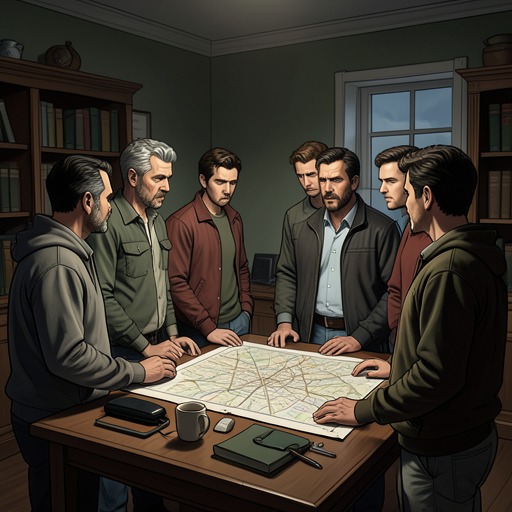
Bobby’s concealed whereabouts have made him difficult to locate: detectives across eight police forces have failed to find him, and Elizabeth refuses to tell Chris Hudson how she tracked him down. Elizabeth and Joyce have also seen evidence that he was occupied elsewhere when Curran was murdered. Chris is told he can inspect that evidence if he produces a warrant, a condition that distinguishes the women’s private investigation from the police procedure he represents. The evidence supports Bobby’s absence from the murder, though its nature is not specified here.
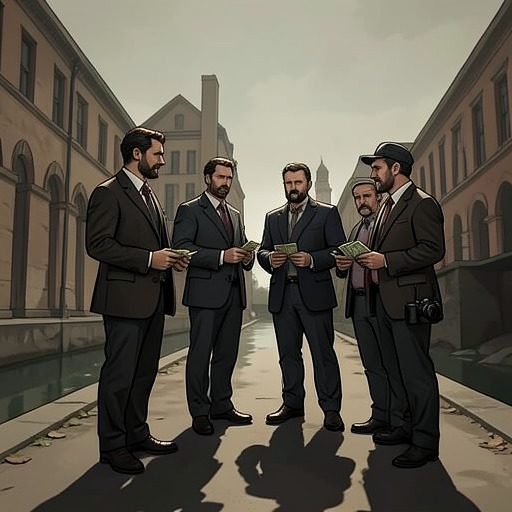
Bobby agrees to tell Chris Hudson and Donna De Freitas everything he knows in exchange for being allowed to return to the crowd without being seen again. In the meeting, he offers a concrete detail about the old circle: Gianni kept a little over one hundred thousand pounds in his flat, holding it for Curran. This disclosure adds a financial connection to the history already suggested by the photograph and shows that Bobby’s knowledge extends beyond the identities of the men pictured. The account does not say whether the detectives accept his proposed terms or whether he ultimately disappears from view.
The shift from Bobby Tanner to Peter Ward gives the character’s part in the novel its central tension. He is at once a concealed witness to the past and a man whose present identity is not reducible to the old criminal association. His florist’s shop does not erase his former role, just as the photograph does not establish his guilt in Curran’s murder. Instead, the investigation uses his testimony to revise what can be inferred from that image: Jason may be wrongly suspected, Gianni’s part in the old events remains important, and the story of the Black Bridge shooting is less straightforward than its familiar version suggests.